
Dysautonomia/POTS
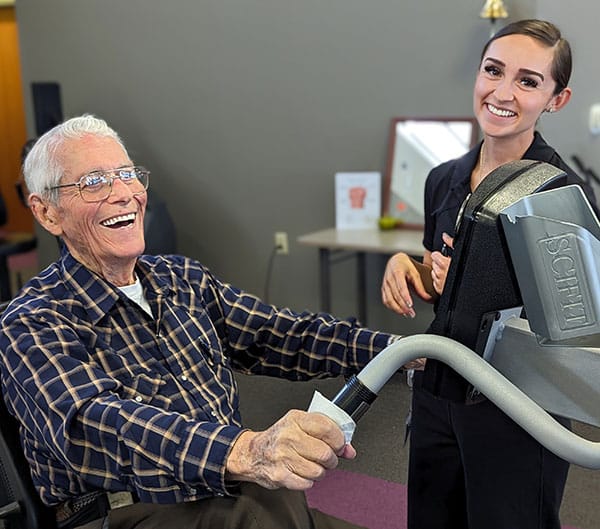 Dysautonomia and POTS Rehabilitation at New Heart A supervised exercise program designed for people who have difficulty tolerating standing and exercise If you have dysautonomia or postural orthostatic tachycardia syndrome — POTS — you may experience rapid heart rate, lightheadedness, fatigue, shortness of breath, weakness, exercise intolerance, or difficulty standing for prolonged periods.
At New Heart Fitness and Health, we have developed a supervised rehabilitation program specifically designed for patients with autonomic dysfunction.
Listen to Dr. Barry Ramo explain the program
What Is POTS?
POTS is one form of autonomic dysfunction. Your autonomic nervous system helps regulate functions that normally occur automatically, including:
- Heart rate
- Blood pressure
- Circulation
- Body temperature
Normally, when you stand, blood vessels in the legs and abdomen tighten to help return blood to the heart and brain.
In POTS, this response may be impaired. Blood may pool in the lower body, reducing blood return to the heart. The heart rate then rises excessively in an effort to maintain circulation.
This can cause:
- Lightheadedness or dizziness
- Rapid heartbeat
- Fatigue
- Shortness of breath
- Blurred or dimmed vision
- Near-fainting
- Weakness
- Difficulty standing or walking
- Exercise intolerance
POTS can cause significant symptoms even when the structure and pumping function of the heart are normal.
Why Exercise Can Be Difficult
Exercise is an important part of treatment for many patients with POTS, but the way exercise is started matters.
Upright exercise, such as treadmill walking or use of an elliptical machine, increases the effects of gravity on circulation. Early in recovery, some patients cannot tolerate this well and may experience worsening symptoms.
For that reason, the New Heart program often begins differently.
We Start With Exercise Your Body Can Tolerate
Patients may initially exercise while lying down or seated, using equipment that reduces the effect of gravity on circulation.
The program may include:
- Recumbent aerobic exercise
- Seated aerobic exercise
- Strength training
- Particular attention to the legs and core
- Gradual increases in exercise duration and intensity
- Progressive introduction of upright exercise as tolerated
- Exercise progression is individualized.
The goal is not to push through severe symptoms. The goal is to gradually improve conditioning and the body's ability to tolerate activity.
The New Heart POTS Program Initial Evaluation
Every patient is initially evaluated by Barry Ramo, MD, FACC, or Robert Orchard, MD.
We review your symptoms, medical history, medications, and current ability to perform normal daily activities.
A supine exercise test — an exercise test performed while you are lying down — is used when appropriate to evaluate your present fitness and your heart-rate and blood-pressure response to exercise.
This information helps us develop an individualized exercise program.
The program consists of:
- 36 Supervised Sessions
- 36 exercise sessions
- 3 sessions each week
- Approximately 1 hour per session
After the initial evaluation, patients may exercise Monday, Wednesday and Friday 8:00 AM to 5:00 PM
Our exercise specialists supervise your progress and modify the program according to your symptoms and exercise tolerance.
Nutrition counseling is also included as part of the New Heart rehabilitation program.
More Than Fitness
The purpose of the program is not simply to make you stronger. We want to help you gradually improve:
- Exercise tolerance
- Cardiovascular conditioning
- Circulation
- Strength
- Ability to tolerate upright activity
- Confidence in physical activity
- Ability to perform normal daily activities
Improvement is often gradual.
Some patients notice improved stamina before symptoms such as lightheadedness completely resolve. Symptoms may also fluctuate during recovery. For that reason, the program is progressed according to the individual rather than according to a rigid timetable.
Dysautonomia After COVID New Heart has developed substantial experience caring for patients who developed autonomic symptoms following COVID-19.
Since the pandemic, we have worked with more than 400 men and women with Long COVID, including many patients with symptoms resembling POTS and other forms of autonomic dysfunction.
The POTS program, however, is not limited to people with Long COVID. We evaluate patients with autonomic dysfunction from many different causes.
Our Approach
The New Heart program was developed in collaboration with electrophysiologists at the New Mexico Heart Institute and incorporates principles supported by research showing that carefully structured exercise can improve exercise capacity and cardiovascular responses in selected patients with POTS.
The important principle is gradual progression. We begin at a level you can tolerate today and build from there.
Interested in the Program? Talk with your physician about whether the New Heart Dysautonomia/POTS Rehabilitation Program may be appropriate for you.
Contact Us
Reach out to learn more or to speak with an exercise specialist about our Cardiac Rehabilitation Program.
referrals@newheartnm.com | (505) 881-8195